

Canada Geese Hazing Techniques
Canada Geese Hazing Techniques: practical guidance, safe next steps, compliance notes, and when to call Birds & Geese Beware for help.

Dog-led Canada goose hazing across NJ, NY & CT
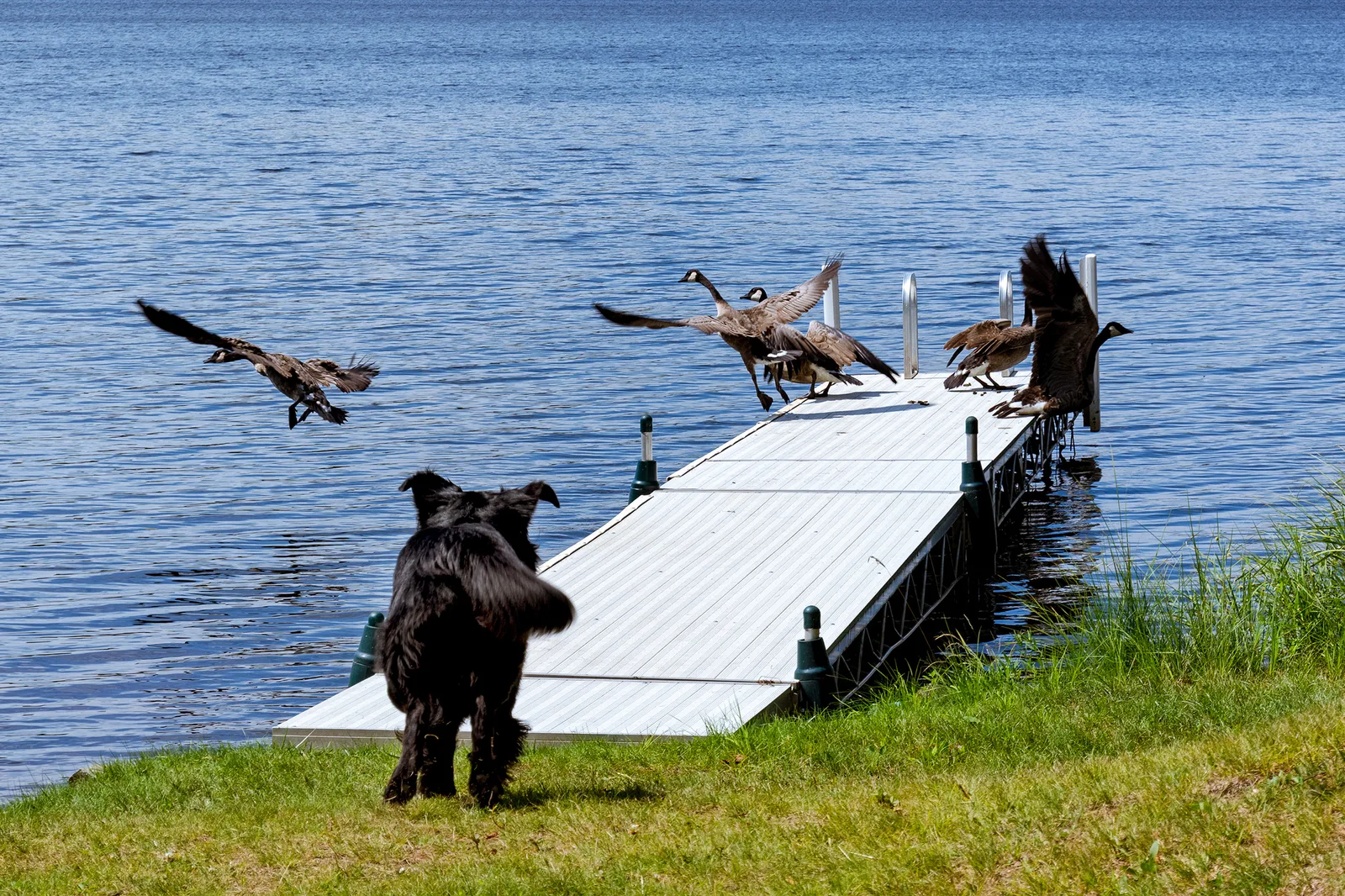
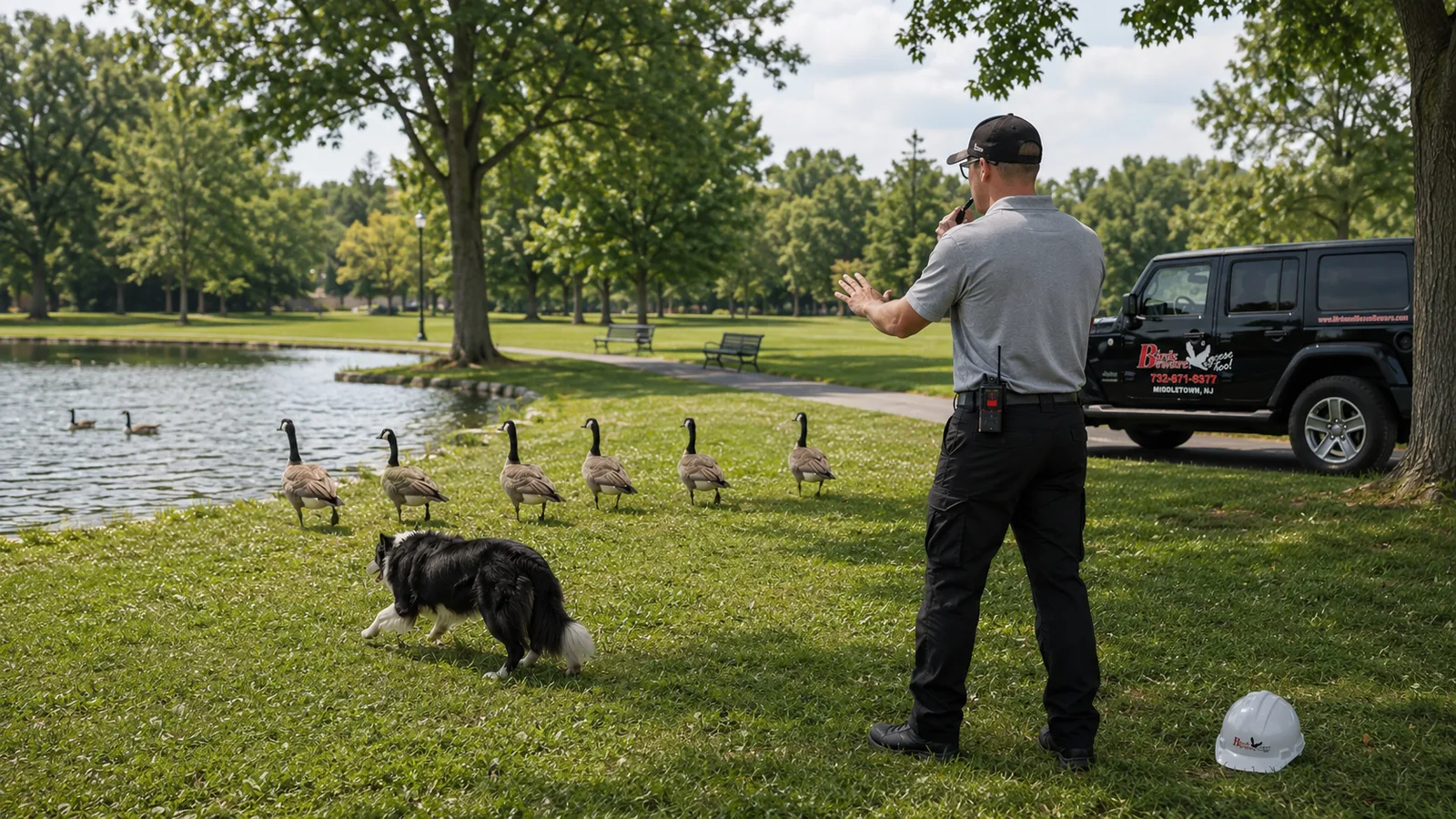
Hazing is the core of humane Canada goose management, and the version that actually holds is delivered by a trained Border Collie and a professional handler. It's a form of humane chasing: pressure a flock respects without a single bird ever being touched. Done well, it's the difference between geese that relocate for good and geese that scatter for an afternoon and come right back the next morning.
Birds & Geese Beware, Inc. has run dog-led clearing programs across New Jersey, New York, and Connecticut since 1991. Every plan is built around the property's layout, the size of the resident flock, and the time of year.
What hazing looks like with a trained Border Collie
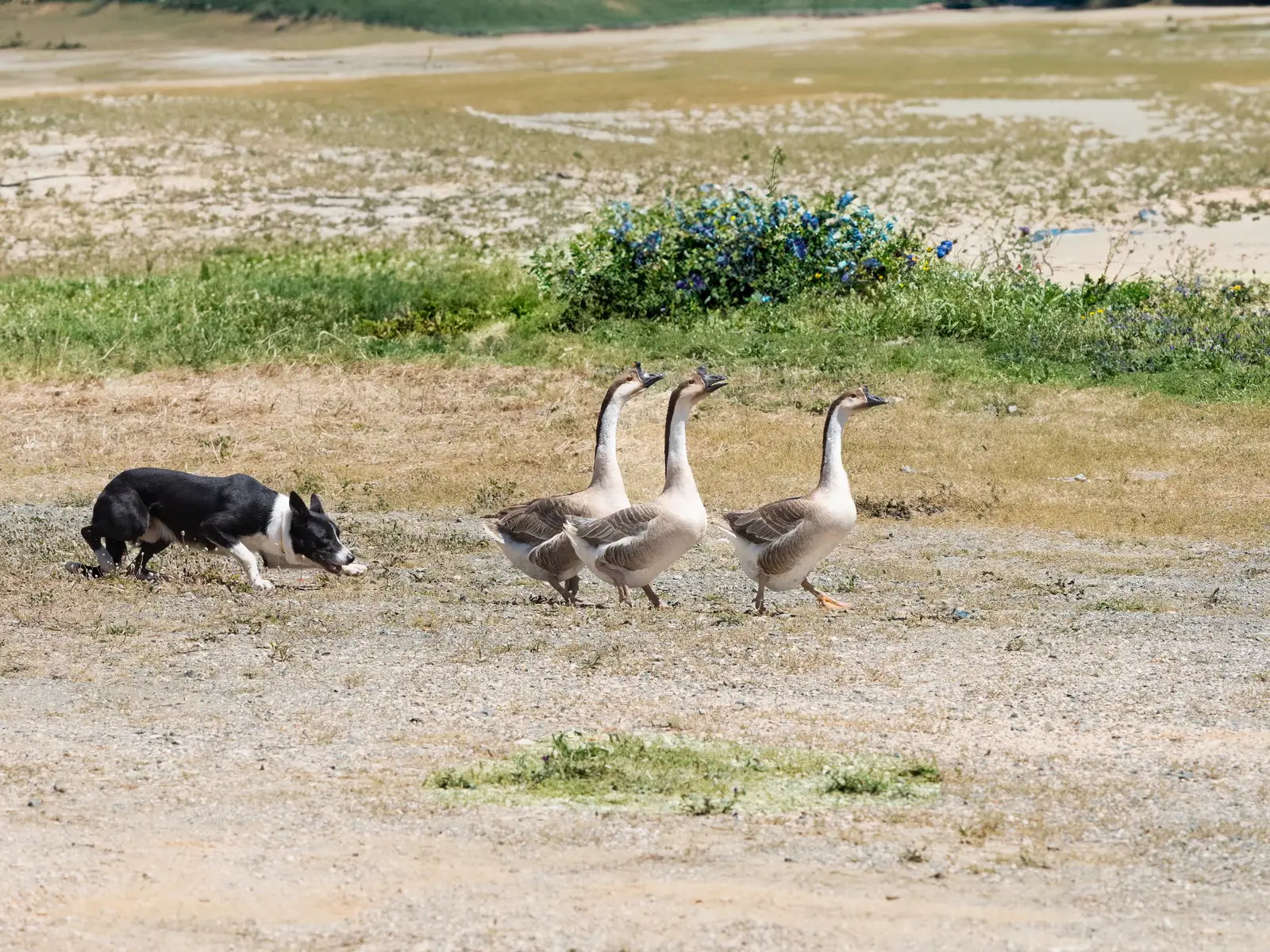
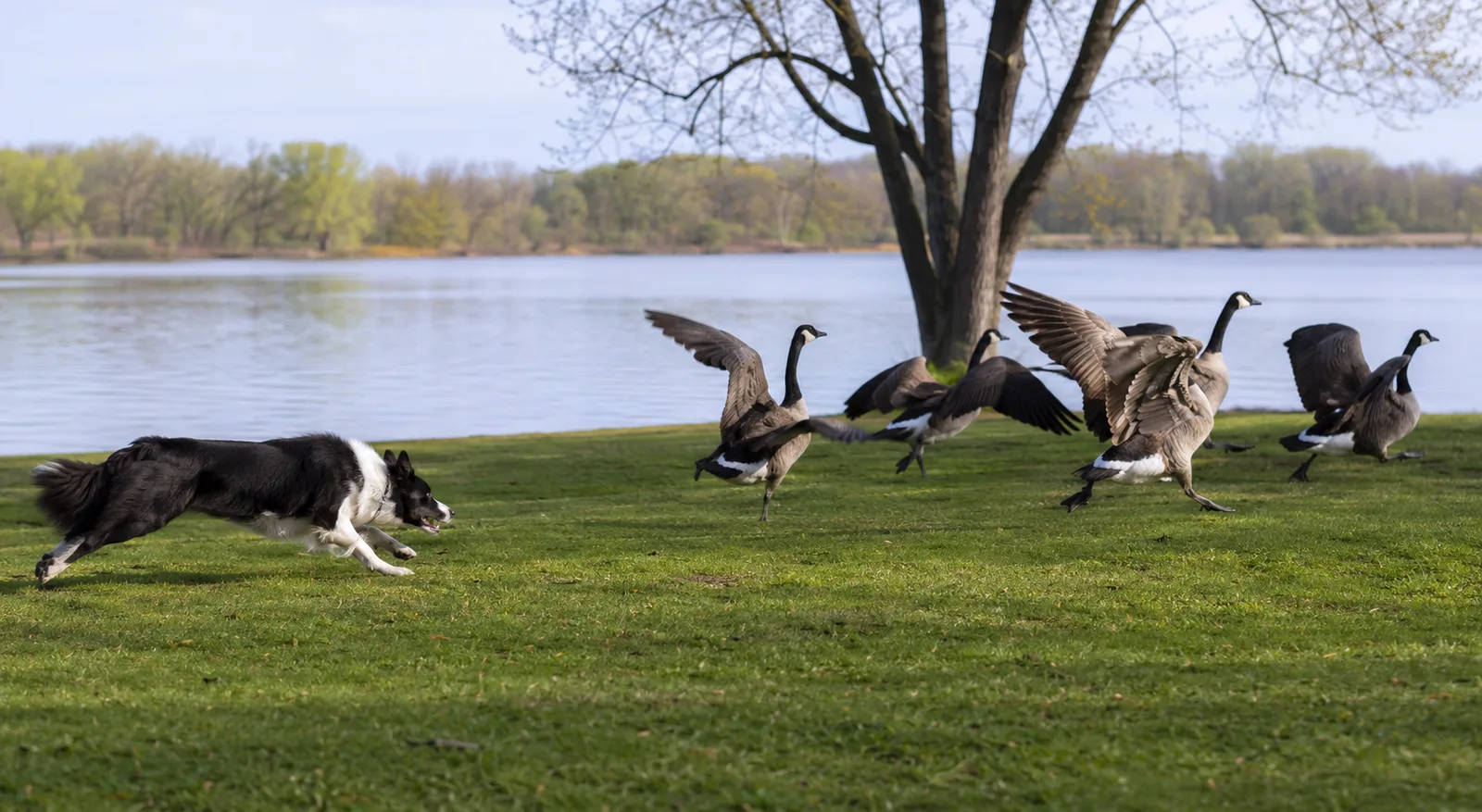
Border Collies are a herding breed bred for centuries to stalk, crouch, and hold a fixed gaze on livestock. Turned loose on a flock of Canada geese, that same instinct reads to the birds as a live predator closing in: the dog crouches low, stalks the group's edge, and locks onto them with a stare geese are hardwired to fear, then closes the distance until the flock lifts off.
Migratory geese pass through on a schedule between northern breeding grounds and southern wintering areas. Resident geese never leave, nesting on the same pond or lawn year after year and growing comfortable with anything that doesn't change, which is exactly why a live, unpredictable predator works where static tactics fail.
Why randomized visits rewire a flock's sense of safety
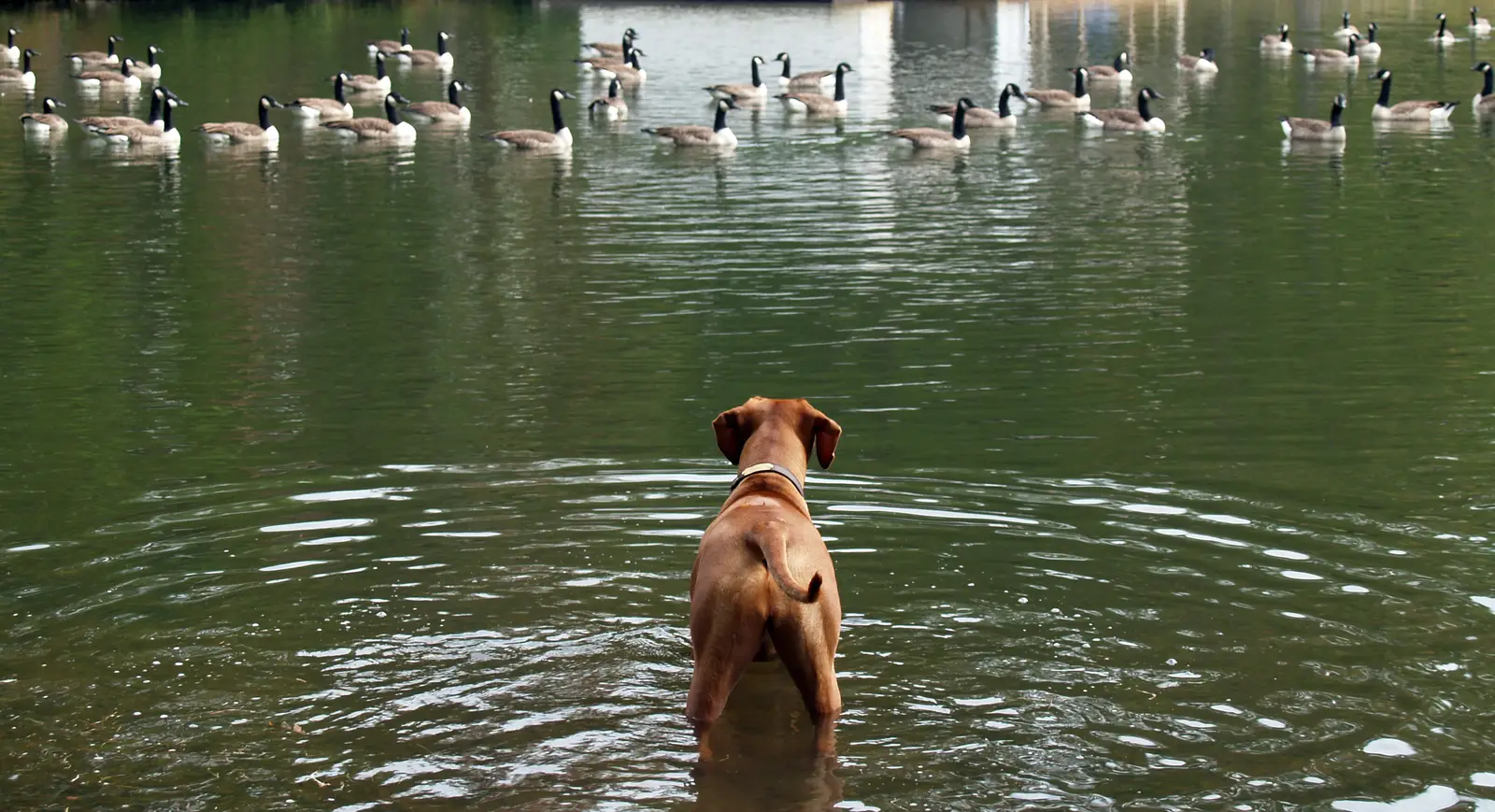
A single scare rarely sticks. What convinces a flock to leave for good is repetition on a schedule geese can't predict, daily visits at random times during the first weeks so the property never feels safe long enough to settle back into.
None of the gimmick methods in that table are services we provide. We deploy trained dogs because it's the only tactic in that comparison that keeps working month after month.
See how the dog-led programs are structured
Every property calls for a different tier, so we match the program to the site, the flock size, and the season.
Working within the law, and completely harmless
Canada geese are protected under the Migratory Bird Treaty Act, so every hazing visit is designed to disturb without harming. Border Collies never make contact with a goose, and the dogs themselves are some of the friendliest, most people-safe working breeds there are, unless you happen to be a goose. Kids, pets, and staff on site are never at any risk.
We stay current on how New Jersey, New York, and Connecticut regulations layer onto federal rules, so a dog-led program never puts a client at legal risk.
What to expect, week by week
- Initial site visit. A handler and dog walk the property to see flock size, nesting locations, exit routes, wind direction, and where geese feed and loaf.
- Written recommendation. A plan, timeline, and cost in writing, ready to present to a board or ownership group.
- Concentrated early visits. The first weeks bring daily, randomly timed visits, the phase most properties run under the Initial Clearing Program.
- Behavior shift. Feeding and loafing routines break down as the flock starts reading the property as unsafe.
- Ongoing coverage. Most properties settle into a Maintenance or On-Call Program so a returning flock meets the same pressure.
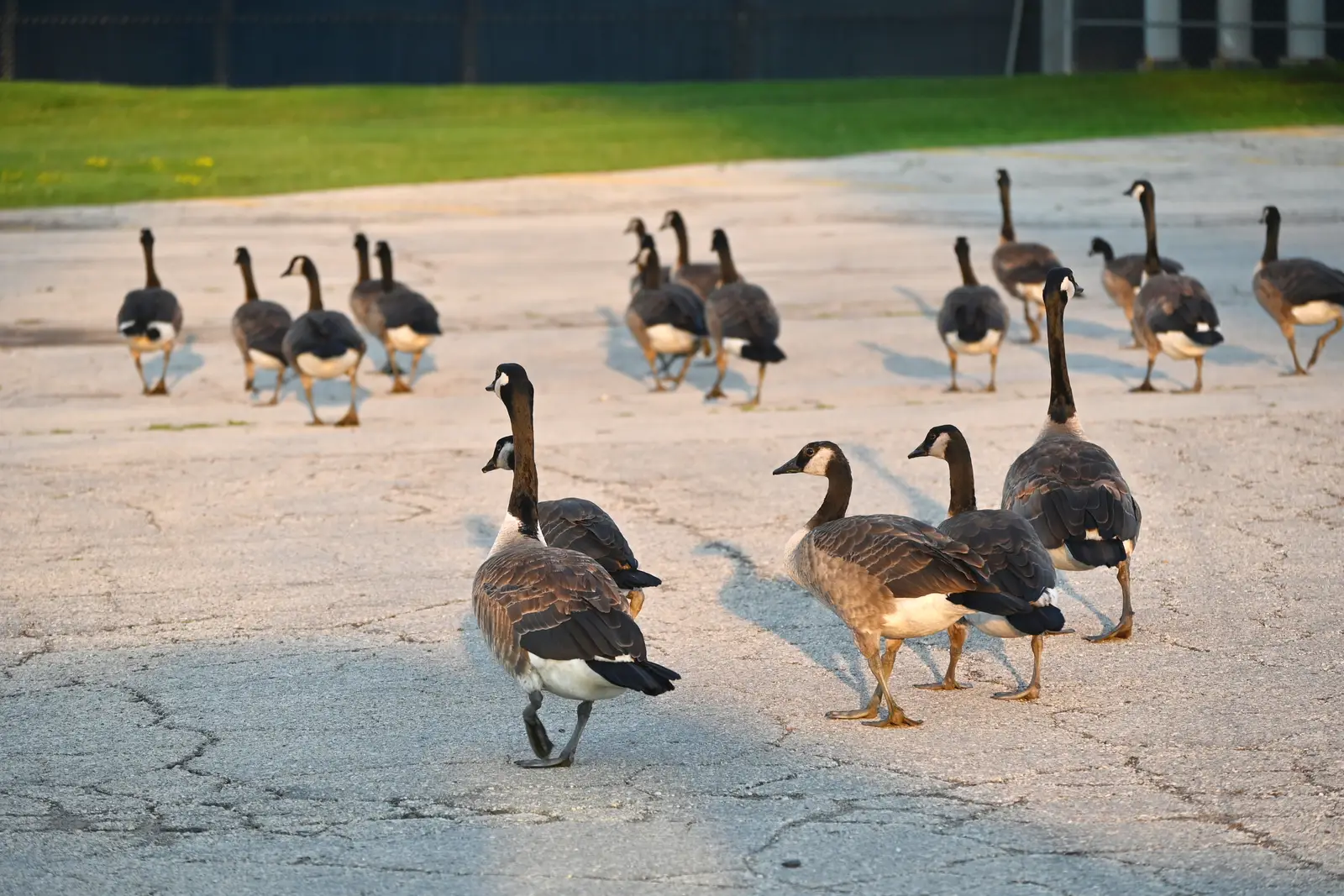
Canada geese hazing for every kind of property
We provide Canada geese hazing for a wide range of commercial, municipal, and residential customers across New Jersey, New York, and Connecticut.
Questions we get about Canada geese hazing
Don't see your question? Call the owner directly — we're glad to talk through your property.
Call us(732) 558-2464Canada Geese Control & Deterrents
Canada Geese Control & Removal
The full humane program: dogs, hazing, and habitat pressure.
View serviceGoose-Chasing Dogs
Trained border collies that teach flocks to move on.
View service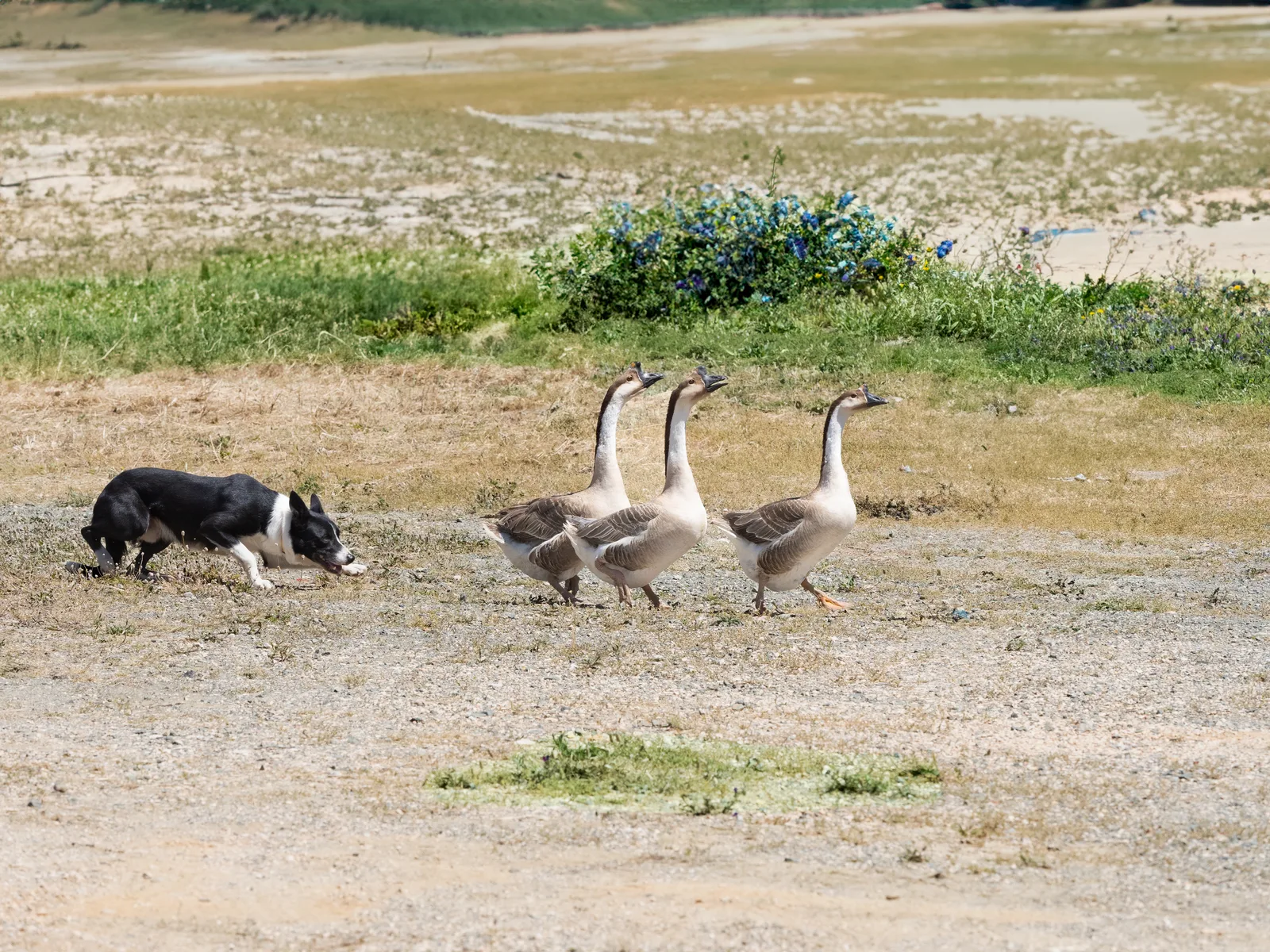
Single Clearing Services
One-time clearing for events, closings, and inspections.
View service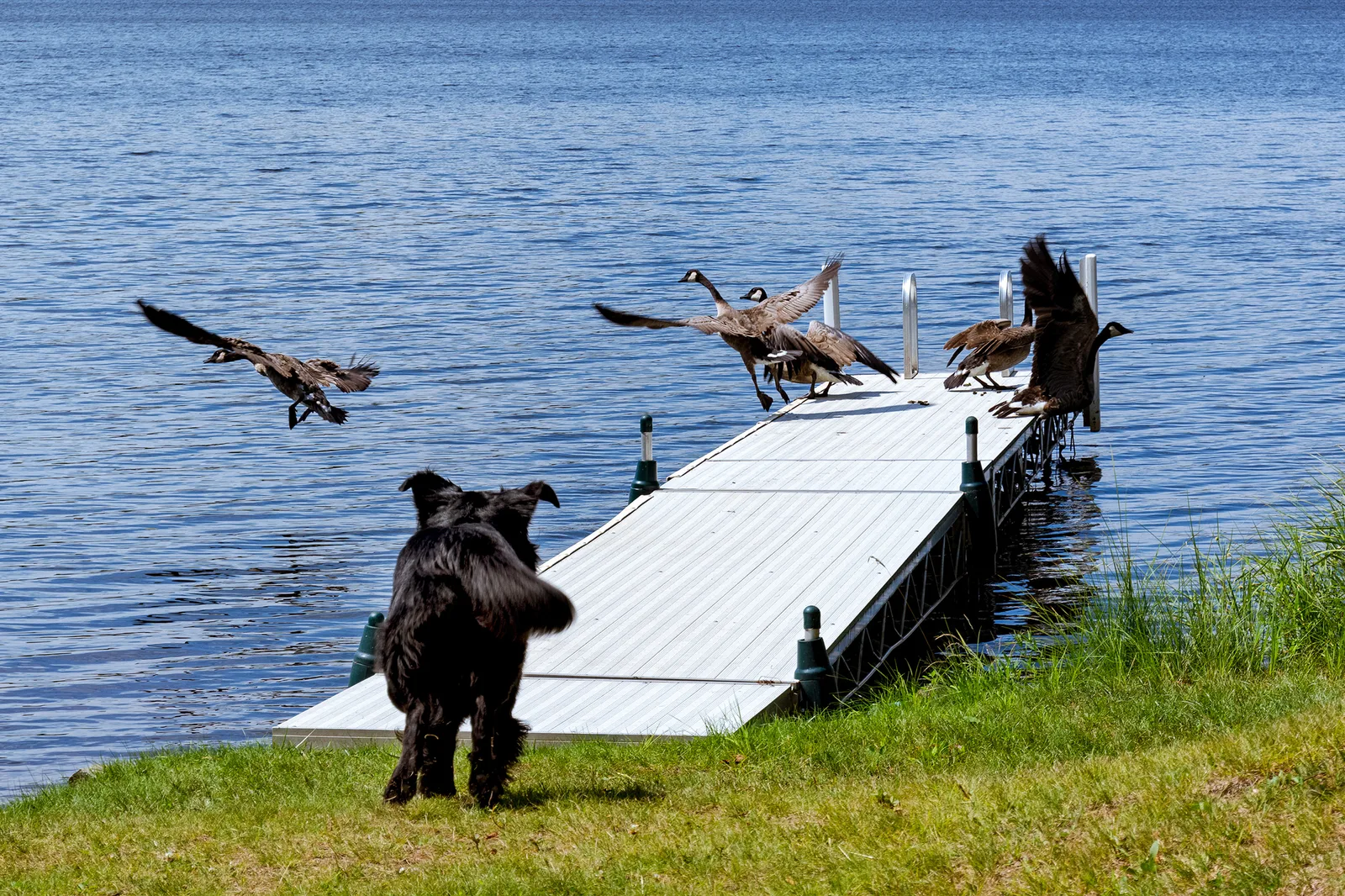
Maintenance Programs
Scheduled visits that keep cleared properties clear.
View service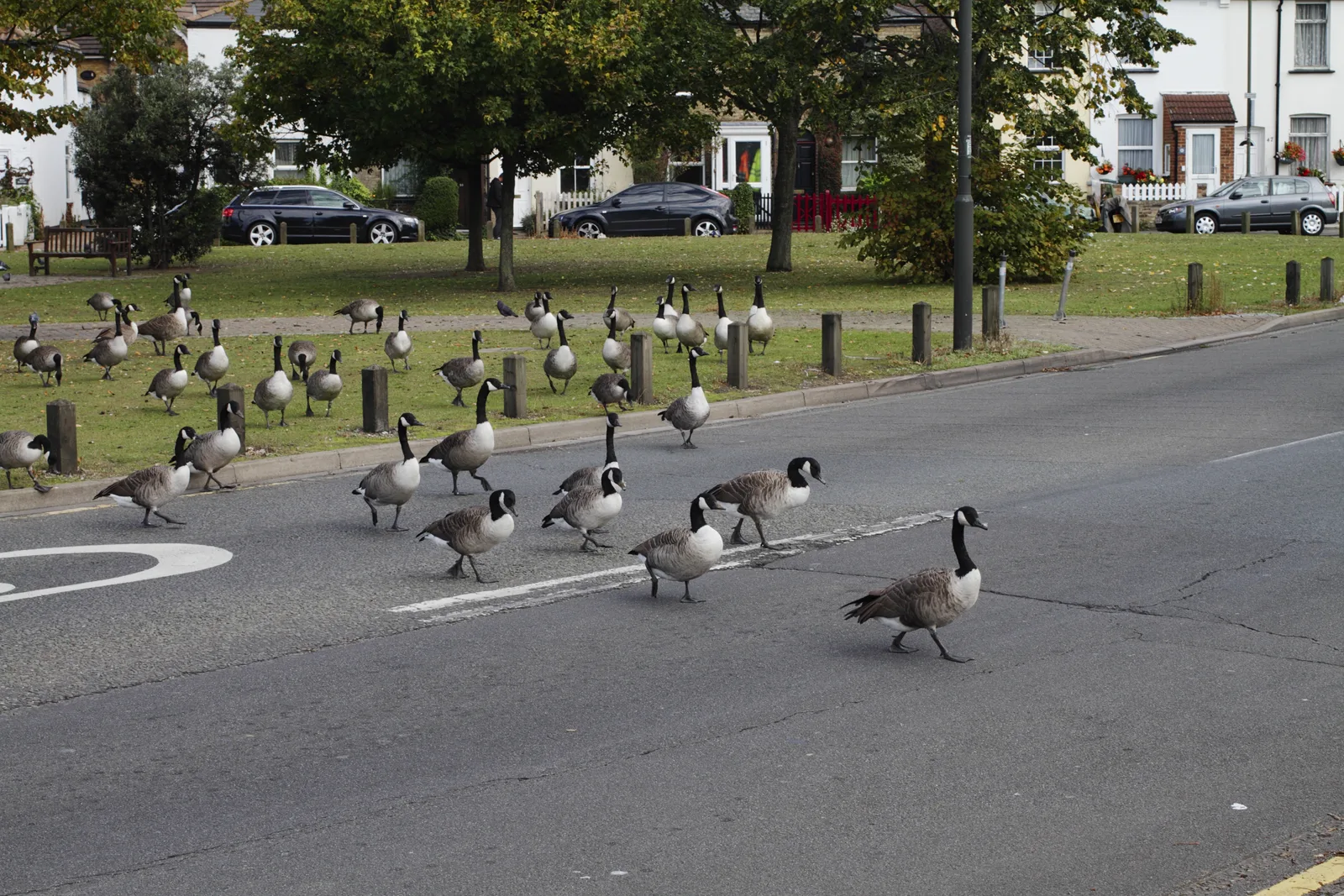
Emergency Services
Rapid response when geese take over overnight.
View service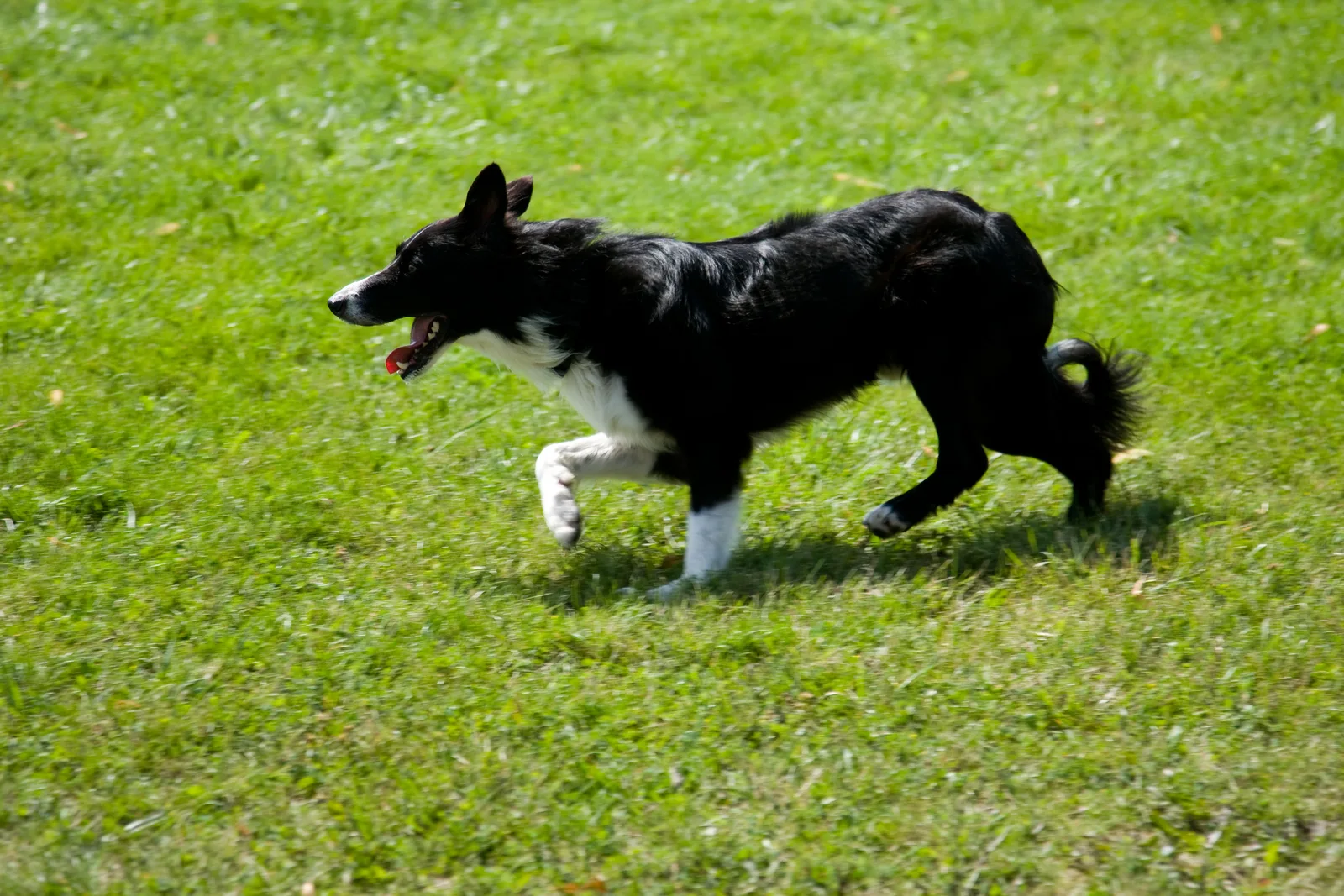
Behavioral Modification
Breaking the site-loyalty habit that brings flocks back.
View service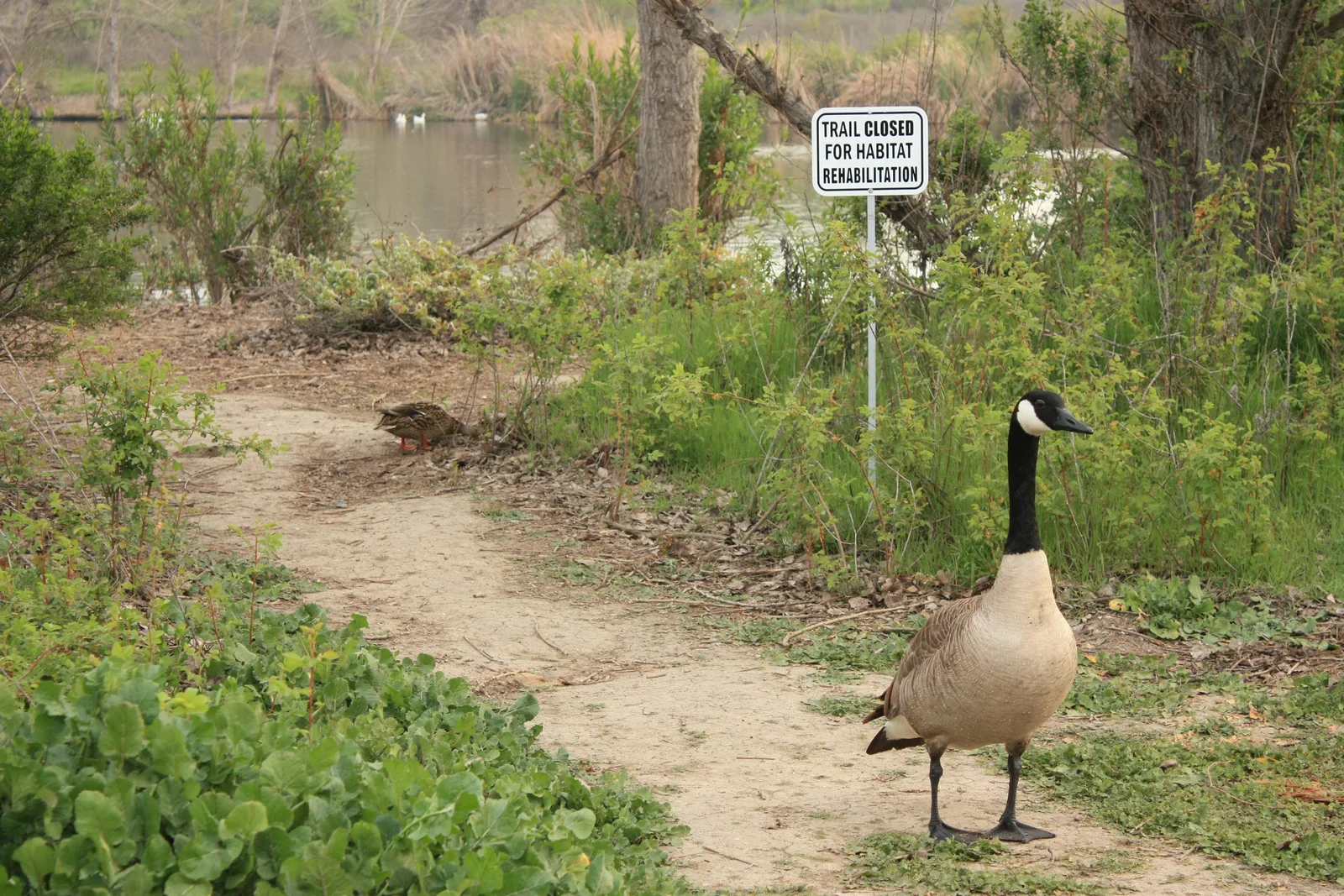
Habitat Modification
Removing the food and nesting cover geese look for.
View service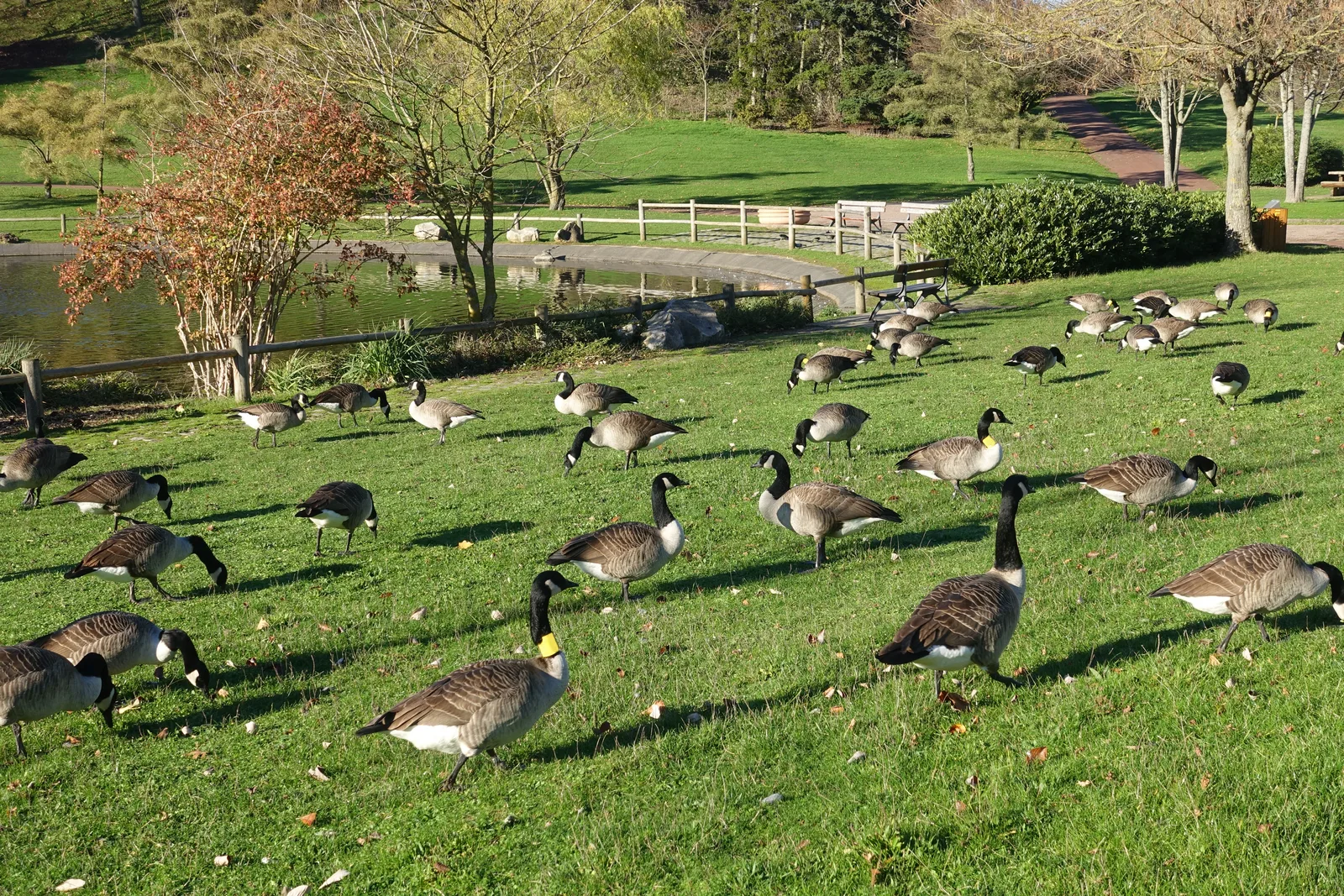
All Geese Deterrents
Every non-lethal deterrent we deploy, compared.
View service
Nuisance Bird Species
Also have birds? Every species we control and deter.
View serviceSite Resources for You
Guides, answers, and company pages — everything else you might need.
Bird Resources
Canada Geese Resources
- Resources for Canada GeeseThe geese knowledge hub.
- Hazing TechniquesHow humane hazing actually works.
- Canada Goose BiologyWhy geese behave the way they do.
- Control MethodsEvery method, and when each applies.
- Geese FAQsCommon questions, straight answers.
- Signs of a Geese InvasionEarly warnings a flock is settling in.
- Geese & Human Health MythsWhat's real and what's exaggerated.
- Property Damage from GeeseTurf, water, and walkway damage explained.
Get in Touch
Choose how to reach us and tell us about your bird or Canada geese problem.